Antigua Guatemala Travel Guide | Exploring Guatemala’s Colonial Gem

Updated: Aug 31

When I booked my trip to Guatemala, there were two places I knew I couldn’t miss.
The first was Antigua.
The second was Lake Atitlán.
I had seen photographs of Antigua for years. Colorful colonial buildings, cobblestone streets, towering volcanoes, and centuries of history packed into a remarkably walkable city. It looked beautiful in pictures, but I quickly learned that photographs only tell part of the story.
The moment I arrived, I slowed down.
There was no checklist.
No itinerary to rush through.
Just a camera around my neck and a curiosity to explore wherever the streets led me.
Every corner revealed something different. Quiet courtyards hidden behind wooden doors.
Historic churches weathered by earthquakes. Local cafés filled with conversation. Street vendors selling handmade crafts. Warm afternoon light reflecting off pastel-colored buildings.
As a photographer, it felt impossible to stop looking around.
This Antigua Guatemala Travel Guide shares the places that inspired me most, practical tips for planning your own visit, photography advice, and why Antigua became one of my favorite cities in Central America.
Travel continues to shape the way I tell stories through photography. Although I visited Antigua as a traveler rather than photographing a wedding, experiences like these influence how I photograph couples throughout Colorado and destinations around the world.
If you’re planning an adventure of your own, you can learn more about my Destination Elopements & Weddings or browse my Photography Packages & Pricing.
Table of Contents
Why Visit Antigua Guatemala? | Antigua Guatemala Travel Guide
Antigua isn’t simply another beautiful city.
It’s a place that invites you to slow down.
Founded in the 1500s and recognized as a UNESCO World Heritage Site, Antigua blends Spanish colonial architecture, rich Guatemalan culture, and dramatic volcanic landscapes into one incredibly walkable destination.
Unlike many cities where attractions feel disconnected, Antigua flows naturally. You can spend an entire day wandering without a plan, discovering quiet alleyways, colorful storefronts, rooftop cafés, hidden gardens, and centuries-old churches within just a few blocks.
For me, Antigua wasn’t about checking landmarks off a list.
It was about experiencing the atmosphere.
Morning light spilling across cobblestone streets.
The smell of fresh coffee drifting from local cafés.
Church bells echoing through the city.
Volcanoes quietly watching over everything in the distance.
It’s one of those rare places where simply walking becomes the highlight of the trip.
My First Impression of Antigua
The first thing I noticed wasn’t the architecture.
It was the pace.
People weren’t rushing.
Locals greeted one another in the streets. Visitors lingered over coffee instead of hurrying to the next attraction. Horse-drawn carriages rolled across the cobblestones while musicians occasionally filled the plazas with live music.
Everything felt intentional.
As someone who spends much of the year photographing weddings, hiking Colorado’s mountains, and chasing sunrises, I appreciated that slower rhythm.
I wandered without a destination for hours.
Some of my favorite photographs weren’t famous landmarks at all.
They were ordinary moments.
A weathered blue doorway covered in vines.
Fresh flowers hanging from a balcony.
Children laughing in Parque Central.
Warm afternoon light bouncing between brightly painted buildings.
Those are the moments that stay with me long after the trip ends.
Walking the Historic Streets
One of the greatest joys of visiting Antigua is simply wandering.
Unlike larger cities where transportation becomes part of the experience, Antigua is incredibly walkable. Nearly every street feels photogenic, and every few minutes you’ll stumble across another beautiful church, courtyard, boutique hotel, or hidden café.
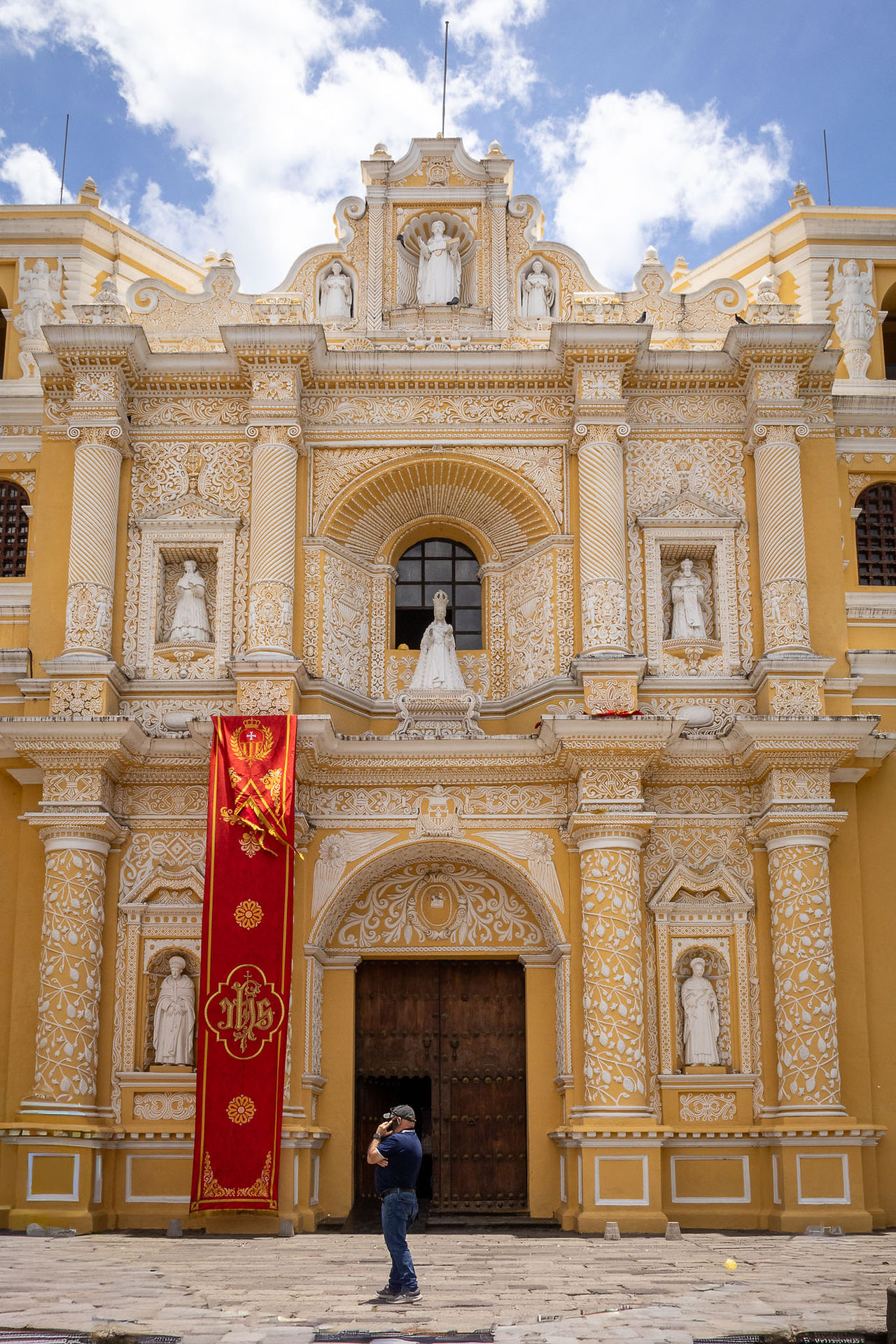
The city is filled with colorful colonial facades painted in shades of yellow, blue, pink, and terracotta. Many buildings have remained remarkably unchanged for centuries, giving Antigua a timeless quality that’s difficult to find elsewhere.
I found myself constantly looking upward.
Wooden balconies.
Stone archways.
Volcanoes appearing between rooftops.
Even ordinary intersections felt carefully composed.
As a photographer, it’s one of those places where inspiration seems to appear naturally without needing to search for it.
Arco de Santa Catalina
No landmark symbolizes Antigua more than the iconic Arco de Santa Catalina.
Originally built in the 1600s to connect a convent to a school, the bright yellow arch has become one of Guatemala’s most recognizable landmarks.
Standing beneath it, I understood why.
Frame the arch correctly, and Volcán de Agua rises perfectly in the distance.
Early in the morning, before the streets become busy, the entire scene feels peaceful. Soft light reflects across the cobblestones while the city slowly wakes up around you.
I visited more than once during my stay because the light transformed the scene throughout the day.
Sunrise offered soft colors and quiet streets.
Golden hour added warmth to the surrounding buildings.
Blue hour created an entirely different atmosphere as the streetlights illuminated the historic architecture.
Sometimes the most photographed places become clichés.
This wasn’t one of them.
The Arco de Santa Catalina genuinely deserves its reputation.
Parque Central
Every great city seems to have a place where life naturally gathers.
In Antigua, that’s Parque Central.
Locals meet friends on shaded benches.
Families relax beneath mature trees.
Street musicians perform throughout the afternoon.
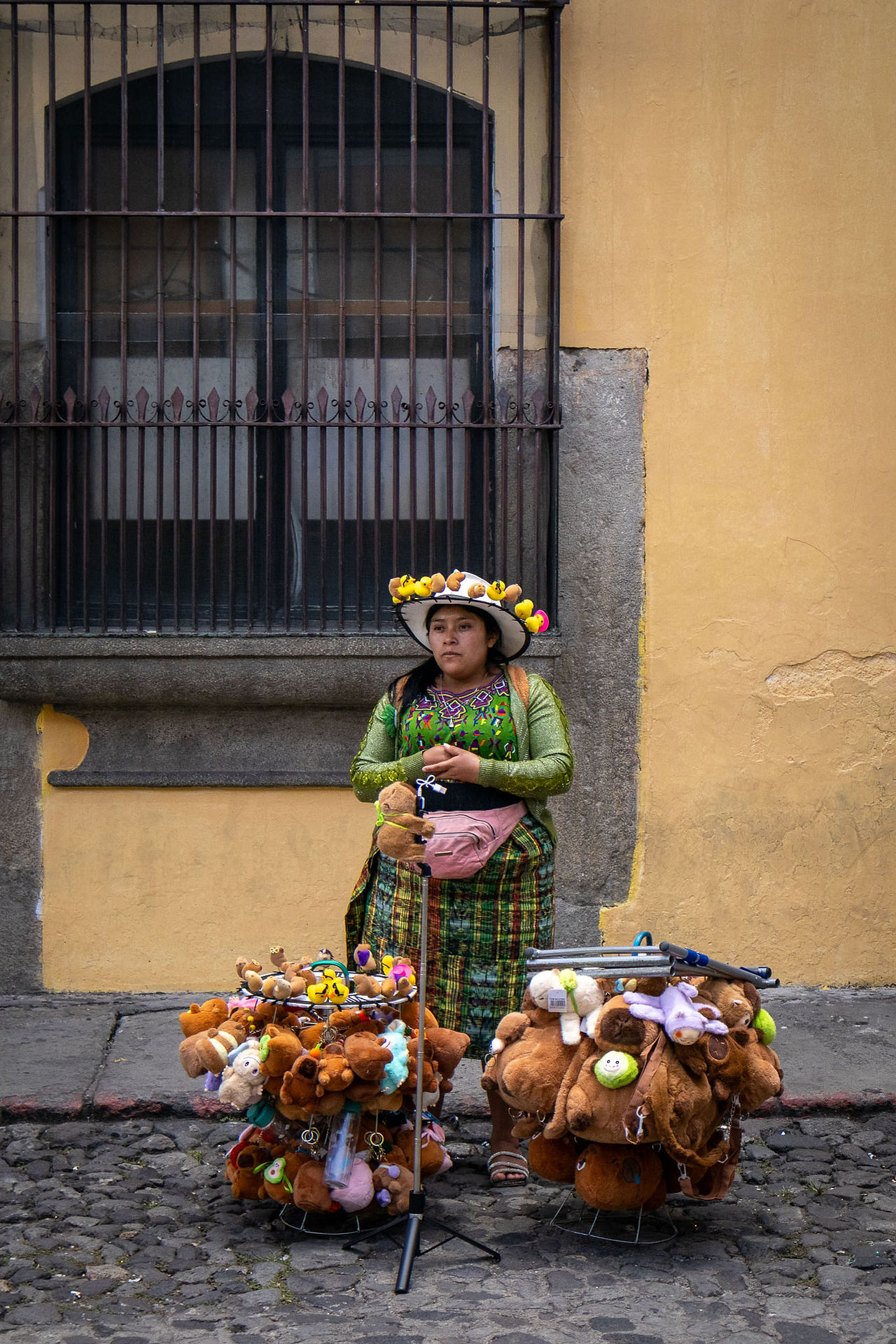
Vendors quietly sell snacks, souvenirs, and handmade crafts around the square.
Surrounding the plaza are some of Antigua’s most important buildings, including the Palacio de los Capitanes Generales and the impressive San José Cathedral.
It’s an ideal place to pause for a while instead of constantly moving from attraction to attraction.
I spent more time here than I originally planned simply watching everyday life unfold.
As photographers, we’re often drawn toward dramatic landscapes.
But sometimes the most meaningful photographs come from ordinary moments happening in extraordinary places.
Cerro de la Cruz
If you only have time for one viewpoint overlooking Antigua, make it Cerro de la Cruz.
The short uphill walk rewards you with panoramic views across the city, framed by Volcán de Agua rising dramatically in the background.
From above, the city’s layout becomes beautifully clear.
Colorful rooftops stretch toward the mountains.
Historic churches punctuate the skyline.
The surrounding volcanoes remind you just how unique Antigua’s setting truly is.
I arrived with my camera expecting a great landscape photograph.
Instead, I found myself standing there for quite a while, simply appreciating the view.
Some places don’t need much explanation.
They simply make you pause.
The Historic Ruins
One of the things that makes Antigua so unique is how beautifully it embraces its history.
Over the centuries, powerful earthquakes damaged many of the city’s churches, monasteries, and convents. Rather than rebuilding everything exactly as it once was, many of these ruins have been carefully preserved, allowing visitors to experience Antigua’s past in a way that feels remarkably authentic.
Walking through places like Convento de las Capuchinas or the Ruins of Santa Clara, I was struck by how nature and history have intertwined. Weathered stone walls frame blue skies overhead, vines climb centuries-old archways, and soft light pours into spaces that were once filled with worshippers.
For photographers, these ruins offer endless opportunities to play with texture, symmetry, and light.
Even if photography isn’t your passion, they’re simply fascinating places to explore.
Every wall has a story.
Coffee Shops and Local Culture
One of my favorite parts of traveling is slowing down long enough to experience everyday life.
Antigua makes that easy.
The city is filled with cozy cafés tucked inside restored colonial buildings, each offering its own atmosphere. Some overlook quiet courtyards filled with tropical plants, while others open directly onto the cobblestone streets where you can watch the city go by.
Guatemala is famous for producing some of the world’s finest coffee, so enjoying a fresh cup here feels like an essential part of the experience.
Between exploring landmarks, I found myself stopping often.
Sometimes to edit photographs.
Sometimes to journal.
Sometimes simply to rest my feet while watching locals and travelers move through the city.
Those quiet moments often become some of my favorite travel memories.
Photography Tips for Antigua Guatemala
Antigua is one of those rare cities that’s beautiful at nearly every hour of the day, but timing still makes a difference.
Sunrise is my favorite time to photograph the city.
The streets are nearly empty, soft morning light fills the colorful buildings, and famous landmarks like the Arco de Santa Catalina become much easier to photograph without crowds.
Golden hour adds incredible warmth to the colonial architecture and creates beautiful backlighting along the cobblestone streets.
Blue hour offers an entirely different mood as lanterns begin illuminating churches, plazas, and historic buildings.
If you’re bringing a camera, I’d recommend packing:
A wide-angle lens for architecture and cityscapes
A versatile zoom lens for everyday travel
Extra batteries and memory cards
A lightweight tripod if you enjoy sunrise or evening photography
A comfortable camera strap, because you’ll probably spend the entire day walking
One thing I’ve learned over the years is that travel photography isn’t just about famous landmarks.
Some of my favorite photographs from Antigua came from quiet side streets, colorful doorways, and everyday moments that many visitors walked right past.
Sometimes the best photograph is the one you weren’t looking for.
Helpful Antigua Guatemala Travel Tips
If you’re planning your first visit, here are a few things I learned during my time in Antigua.
Wear Comfortable Shoes
The city’s cobblestone streets are beautiful, but they can be uneven. Comfortable walking shoes make exploring much more enjoyable.
Start Your Days Early
Early mornings are cooler, quieter, and offer the best photography conditions before larger crowds arrive.
Carry Cash
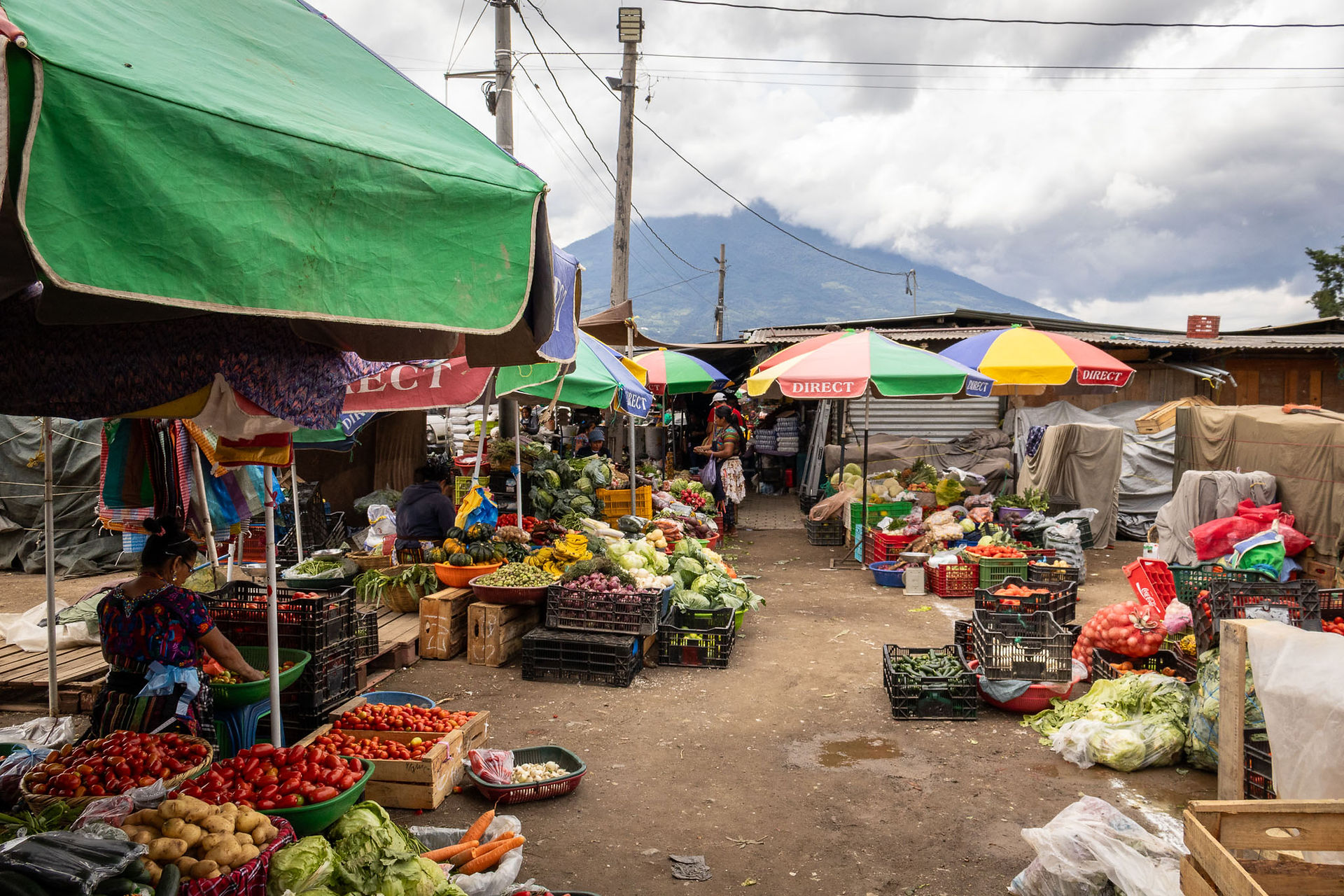
Many restaurants and hotels accept credit cards, but smaller cafés, local markets, and street vendors often prefer cash.
Slow Down
Antigua isn’t a city that rewards rushing.
Leave room in your itinerary for wandering, getting lost, discovering hidden courtyards, and sitting in a café longer than you planned.
That’s where much of the city’s magic lives.
Respect Local Culture
Antigua is home to vibrant traditions and welcoming communities. Support local businesses whenever possible, ask permission before photographing people, and help preserve the city’s historic character by practicing Leave No Trace principles during your visit.
Best Time to Visit Antigua Guatemala
One of the reasons Antigua is such a popular destination is that it’s enjoyable throughout the year.
November through April generally brings the driest weather and clear views of the surrounding volcanoes, making it one of the busiest seasons for visitors.
May through October brings greener landscapes and occasional afternoon rain showers. While you’ll want to carry a light rain jacket, showers are often brief, and the city feels quieter during these months.
Because Antigua sits at roughly 5,000 feet above sea level, temperatures remain pleasantly mild year-round.
No matter when you visit, I’d recommend planning at least one sunrise walk through the city.
Watching Antigua slowly wake up is one of the highlights of the entire experience.
Where to Stay in Antigua Guatemala
Antigua offers accommodations for nearly every travel style and budget.
Boutique hotels tucked inside restored colonial homes provide a uniquely local experience, while larger luxury properties offer beautiful courtyards, rooftop terraces, and views of the surrounding volcanoes.
If it’s your first visit, staying within walking distance of Parque Central makes exploring incredibly easy. Most major attractions, restaurants, cafés, and photography locations are only a short walk away.
One of my favorite aspects of Antigua is that you rarely need transportation once you’ve arrived.
The city encourages you to explore on foot.
Why Antigua Continues to Inspire Me
When I think back on my time in Guatemala, I naturally remember the volcanoes, the colorful streets, and the beautiful architecture.
But those aren’t the first memories that come to mind.
I remember slowing down.
I remember wandering without a destination.
I remember sitting in quiet cafés, listening to church bells echo through the city, and watching golden light spill across centuries-old buildings at the end of the day.
Travel has a way of changing the way we see the world.
Every destination teaches us something new about people, culture, and ourselves.
As a photographer, those experiences continue to shape how I approach storytelling.
Whether I’m photographing a family exploring Colorado, an engagement session in Garden of the Gods, or a destination wedding somewhere across the world, I’m always searching for photographs that feel honest rather than staged.
Antigua reminded me that the best stories often happen when we simply slow down enough to notice them.
Frequently Asked Questions
How many days should you spend in Antigua Guatemala?
I recommend spending at least three days. That gives you enough time to explore the city’s historic landmarks, enjoy its cafés, photograph sunrise and sunset, and take a day trip if you’d like.
Is Antigua Guatemala worth visiting?
Absolutely.
For me, it became one of the highlights of my entire trip to Guatemala. The combination of history, architecture, culture, and volcanic scenery makes it unlike anywhere else I’ve visited.
Is Antigua walkable?
Yes.
One of the city’s greatest strengths is how easy it is to explore on foot. Most major attractions, restaurants, and cafés are within walking distance of one another.
Can you visit Lake Atitlán from Antigua?
Definitely.
Many travelers combine Antigua with Lake Atitlán, making the two destinations a perfect introduction to Guatemala. If you’re planning both, be sure to read my Lake Atitlán Travel Guide for additional inspiration.
Final Thoughts
Antigua isn’t just a destination.
It’s a city that quietly invites you to slow down, look a little closer, and appreciate the beauty in everyday moments.
Long after I returned home, I found myself thinking about the colorful streets, historic churches, warm conversations, and volcanoes rising above the rooftops. It wasn’t one landmark that made Antigua unforgettable.
It was the feeling of being there.
Travel continues to influence everything I do as a photographer. Every journey teaches me something new about light, storytelling, and human connection, lessons I carry into every engagement session, family portrait, wedding, and destination adventure I photograph.
If you’re planning your own adventure, whether it’s a trip across Guatemala, a family vacation in Colorado, an engagement session, or a destination wedding somewhere in the world, I’d love to help tell your story.
You can learn more about my Destination Elopements & Weddings, browse my Photography Packages & Pricing, or Contact Me to start planning.
Thank you for following along on this journey. I hope this guide helps inspire your own visit to one of Guatemala’s most beautiful cities.
Explore More of My Travel Stories
Antigua was one chapter of a much bigger journey.
If you enjoy following my travels, hiking adventures, photography, and the places that continue to shape how I see the world, you can explore more of my Travel & Personal Stories.
From Colorado mountain adventures and 14ers to international trips across Europe, Central America, and beyond, this is where I document the experiences behind the photographs.







Comments